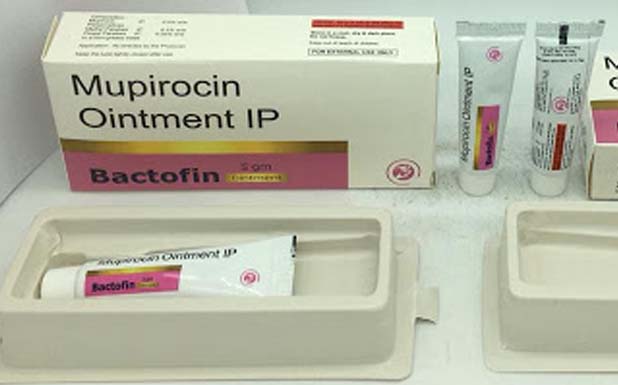
Indications
● Impetigo
● Impetigo caused by Staphylococcus aureus
● Impetigo caused by streptococcus pyogenes
● Secondary infection Skin infection
Mechanism of Action
Mupirocin specifically and reversibly binds to bacterial isoleucyl transfer-RNA (tRNA) synthetase, which is an enzyme that promotes the conversion of isoleucine and tRNA to isoleucyl-tRNA. Inhibition of this enzyme subsequently leads to the inhibition of the bacterial protein and RNA synthesis. Mupirocin is bacteriostatic at lower concentrations but it exerts bactericidal effects with prolonged exposure, killing 90-99% of susceptible bacteria over a 24 hour period.
Pharmacokinetics:
Systemic or percutaneous absorption of mupirocin following dermal application is expected to be minimal in adults and children. The protein binding of mupirocin is reported to be over 95% and is metabolised in the liver. In healthy male volunteers, the elimination half-life of mupirocin was about 20 to 40 minutes following intravenous administration.
Side Effects
The product is possible safe for most adults. There is no disadvantage associated with the product if taken under the recommended usage however burning, itching, dryness, redness and oily skin can be observed in some patients.
Interactions
The risk or severity of bleeding can be increased when Mupirocin is combined with warfarin, 4-hydroxycoumarin, coumarin, diphenadione.
Contraindications
● You should not use this medicine if you are allergic to mupirocin
● Renal impairment
● Do not use mupirocin topical on a child without medical advice. The cream should not be used on a child younger than 3 months old
● Not be used in pregnancy and breast feeding
Precautions & Warnings
● Cautions against use of mupirocin ointment in burn patients, particularly those with extensive burns
● Clostridium difficile-associated diarrhea (CDAD) reported with use; if CDAD suspected or confirmed, discontinue ongoing antibacterial drug use not directed against Clostridium difficile
● Prolonged use may result in overgrowth of nonsusceptible organisms, including fungi
How to use
Before applying this medicine, thoroughly wash the affected areas with warm water and soap, rinse well, and pat dry. When applying the medicine, use enough to cover the affected area lightly. You should apply the medicine to the whole area usually 3 times a day. You may cover the treated area with a bandage.
Storage
● Store mupirocin topical ointment at room temperature. Keep it between 68°F and 77°F (20°C and 25°C). Don't freeze it
● Don't store this medication in moist or damp areas, such as bathrooms
FOR EXTERNAL USE ONLY
Disclaimer:The data uploaded is made from content already available on internet.The company holds no right of it and is not responsible for any wrong information.